In nature, dogs and cats are meat-eating predators, or what scientists call carnivores. Cats are called obligate carnivores, which means their diet must consist primarily of meat. When wild dogs or cats consume their prey, often plant-eating animals or “herbivores,” they eat the entire animal, including hair, bones, entrails, blood, stomach contents, etc. By consuming their prey’s stomach and intestinal contents, which are partially digested plant materials, natural carnivores also obtain some additional essential nutrients available only from plants.
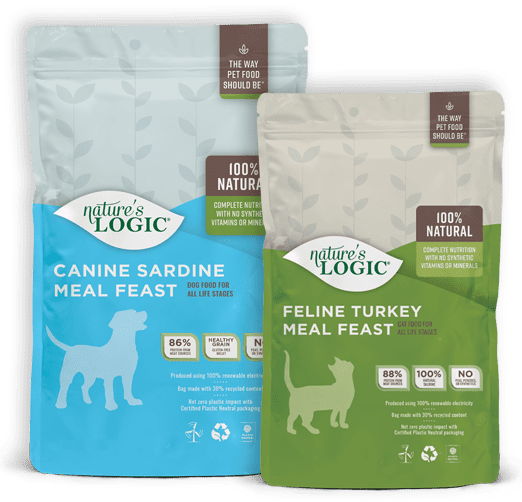
Nature’s Logic pet foods are formulated the way a truly natural diet should be. We never use man-made, chemically-synthesized vitamins, minerals, or amino acids. Nature’s Logic 100% natural pet foods are made primarily of meats and other high-quality protein sources, combined with carefully selected plant products to naturally provide the essential nutrition your pet needs to thrive.
High Protein Content and Quality
For your natural carnivore, Nature’s Logic foods are rich in protein, derived from beef, chicken, duck, lamb, pork, fish, venison, and rabbit. Our foods range in dry matter protein content from 31.5% to 51.69%, depending upon the specific product, and exceed the AAFCO* Nutrient Profiles for all essential amino acids. We offer various protein formulas, making it easy to rotate your pet’s diet to avoid developing allergies to any specific protein. Nature’s Logic uses high-quality proteins and fats obtained predominantly from animal sources, just as dogs and cats would naturally consume in the wild.
Nature’s Logic utilizes dried meals as the main source of protein in our original kibble diets. Our Distinction recipes feature whole meat as the first ingredient and also use high quality meat meals. Utilizing high quality meals allows our dry recipes to deliver a higher final protein content. Offering a lower moisture percentage, our meat meals are more nutrient dense than fresh alternatives and come from high quality animal protein sources, such as lean muscle meat. According to AAFCO*, pet food ingredients are listed on labels by the weight of the initial components used, not the final weight after cooking. Fresh meat or poultry will lose 90% of its water weight during production, significantly altering the final content of the added fresh protein sources. Nature’s Logic achieves high protein content in its kibble, without adding synthetic amino acids, by using dried forms of quality meats, poultry and fish from the beginning of the dry food production process.
*The Association of American Feed Control Officials
100% Natural Food Ingredients Provide Essential Vitamins & Minerals
Nature’s Logic is committed to providing all the nutrients a healthy pet needs, and doing it with 100% natural ingredients. The essential vitamins, minerals and other trace nutrients in our foods come from fruits, vegetables, nuts, seeds and other natural food ingredients. We never add chemically synthesized vitamins, minerals or other artificial nutrients. Nature’s Logic® provides complete and balanced nutrition for your pet by using food, not chemicals.
Never Fortified With Synthetic Vitamins Packs
Helping your pet utilize more of the nutrients from his food.
Probiotics & Enzymes Support Healthy Digestion
Your pet’s digestion is essential to his overall health. Good digestion has been linked to a strong immune system, healthy skin and coat, fewer allergies, a reduction in hairballs, as well as less gas and waste. Whole food ingredients, like those used to make Nature’s Logic foods, naturally contain probiotics and enzymes to help pets maintain good digestive health.
Probiotics are beneficial bacteria normally present in your pet’s digestive system. Maintaining strong levels of these naturally occurring microorganisms help reduce the potential for diseases caused by pathogens, or bad bacteria. These positive effects of probiotics on both humans and animals have been well documented for over thirty years.
Enzymes aid in digestion by helping your pet utilize more of the nutrients from his food. Nature’s Logic uses a multi-enzyme blend of plant-based enzymes that includes protease to digest protein, amylase to digest starch, cellulase to break down fibrous foods, and lipase to digest fats. This proprietary enzyme blend is specially formulated to support the digestive system of dogs and cats on high animal-protein diets.
Note: Because probiotics and enzymes are temperature sensitive, Nature’s Logic has added them to our Dry Kibble after the cooking process is complete. Further, the probiotics we use are microencapsulated, to ensure they remain viable and active when they reach your pet’s bowl.
Latest Blog Posts
 Can Dogs Eat Sardines? Sardine Nutrition, Benefits & RisksMarch 5, 2024 - 7:19 pm
 What Would Dogs Eat in the Wild? Exploring Natural vs. Domesticated DietsMarch 5, 2024 - 7:18 pm
 Dog Diets: Nutrient-Rich Fruits & Vegetables for DogsMarch 5, 2024 - 7:15 pm
 Feline Diets: Can Cats Eat Seaweed or Kelp?March 5, 2024 - 7:15 pm